Luau Digital Papers Patterns: Practical Workflow Integration for Creative Projects
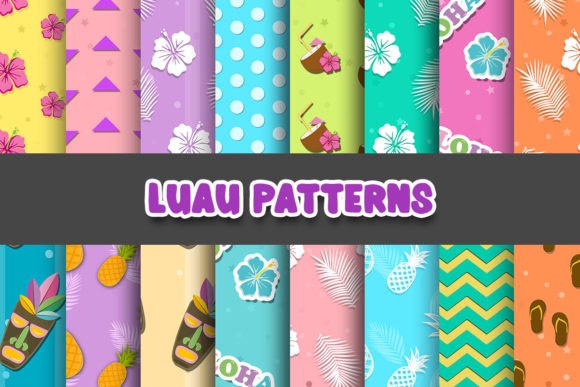
When you work with visual content regularly, the difference between a finished piece that feels polished and one that feels rushed often comes down to the assets you use. Luau Digital Papers Patterns offer a collection of sixteen themed backgrounds that include luau, tiki, and related island-inspired motifs. These are not generic tropical prints. They are patterned paper assets designed to function as structural elements in a larger creative workflow, whether you are building an invitation suite, designing a digital scrapbook page, or producing branded social media content for an event.
Understanding how these digital papers integrate into your process matters more than simply knowing they exist. The value lies in when you deploy them, how you prepare them for your specific output medium, and what decisions you make around compatibility, organization, and consistency.
What Luau Digital Papers Patterns Are and Where They Fit
Digital papers are high-resolution image files that mimic the look of patterned scrapbook paper. In the case of this particular set, each file contains a distinct pattern built around tropical luau themes—think tiki faces, palm fronds, hibiscus silhouettes, ocean waves, and geometric motifs that echo Polynesian textile traditions. The set provides sixteen unique patterns, which gives you enough variety to layer, contrast, and combine without running into repetition problems.
These assets fit into a broader creative pipeline at several points. You might use them during the planning phase of a project to test color palettes and visual direction. You might use them during execution as background layers for text, photo mats, or envelope liners. Or you might use them after the core design is complete as accent elements to add depth or thematic consistency. The specific timing depends on your workflow, but the key point is that these papers are not standalone pieces. They are components that interact with other assets, software, and design decisions.
Before the Project: Preparation and Asset Management
The most overlooked stage of any creative project is preparation. Before you open your design software, you should know what you have and how it behaves. Start by examining each of the sixteen patterns at full resolution. Check for repeating tile boundaries, color density, and line weight. Some patterns will be dense and busy, suitable for small accent areas. Others will be open and light, ideal for full-page backgrounds behind text.
Organize these files in a folder structure that matches your workflow. A common approach is to sort by pattern type, color dominance, or intended use. For example, you might create subfolders named Full Backgrounds, Accent Borders, and Overlay Candidates. This upfront organization saves time later when you are in the middle of a tight deadline and need to locate a specific tiki motif quickly.
Check file format and resolution compatibility with your design tools. Most digital papers come as JPEG or PNG files at 300 DPI, which works well for print and professional digital output. If your workflow uses CMYK color space for commercial printing, you will need to convert the files before placing them into layouts. If you work exclusively in RGB for web or social media, the files are ready to use as is. Knowing these details before you start prevents mid-project color shifts or resolution mismatches.
During the Project: Layering, Composition, and Tool Interaction
Once you begin the design phase, the patterns become structural elements. They are not decorative afterthoughts. They define the visual hierarchy of your page or screen. Here is how they interact with other components:
- Text readability: A pattern with high contrast and dense detail will compete with text. Use such patterns as borders, partial backgrounds, or masked behind photo layers. Reserve the lighter, more open patterns for areas where text sits directly on the paper.
- Photo integration: Place photos on top of a pattern and use blending modes like Multiply or Overlay to let the pattern show through. This works especially well with tropical motifs where the pattern echoes the environment in the photo. Alternatively, use a solid white or colored mat between the photo and the pattern to create separation.
- Multi-paper compositions: Combine two or three patterns in a single layout. Use a dominant pattern for the main background, a secondary pattern for a header or footer band, and a tertiary pattern for small accent shapes like circles or tags. The sixteen-pattern variety gives you room to experiment without buying additional sets.
- Software-specific workflows: In Adobe Photoshop, place the pattern as a Smart Object so you can scale it non-destructively. In Canva, upload the files as background elements and adjust transparency. In Affinity Publisher, use the pattern as a fill layer and apply layer effects for depth. Each tool handles digital papers slightly differently, but the core principle is the same: treat the pattern as a flexible layer, not a locked background.
After the Project: Quality Control and Consistency Checks
After you complete a layout, step back and review the pattern usage for consistency across the entire project. If you are producing a set of invitations, thank-you cards, and signage for a luau-themed birthday party, all pieces should feel visually connected. Check that the same pattern does not appear in conflicting roles on different pieces. For example, using a dense tiki pattern as the main background on the invitation but as a tiny accent on the thank-you card can create a disjointed experience.
Perform a print test if the project will be physical. Patterns that look balanced on screen can become overwhelming in print, especially if the pattern has high contrast or thin lines. Print one copy on the paper stock you intend to use. If the pattern overpowers the text or photos, reduce its opacity, scale it down, or mask part of it. For digital-only projects, preview the pattern at actual pixel size on different screen sizes to ensure it does not cause visual fatigue or readability issues.
Practical Use Cases and Workflow Examples
To make this concrete, here are three workflow scenarios that show how Luau Digital Papers Patterns integrate into real projects.
Event Invitation Suite for a Luau Birthday
A small business owner who designs custom party invitations can use these patterns as the foundation for a coordinated suite. Start with the lightest pattern in the set as the main invitation background. Place event text in a dark font directly on this pattern. Use a medium-density pattern for the response card and a dense accent pattern for the envelope liner and belly band. The entire suite uses patterns from one set, so colors and motifs stay consistent. The workflow involves about four hours of layout work, including print tests, because the patterns are pre-organized and require no additional creation time.
Digital Scrapbook Page for a Vacation Memory
A hobbyist scrapbooker working in a digital format can import a pattern into a 12x12-inch canvas in Procreate or Photoshop. Place a vacation photo on top and use a clipping mask to fill a shape, such as a circle or heart, with a second pattern from the set. Add journaling in a text box on a third pattern that has been softened with opacity. The result is a layered page that looks like paper crafting but takes about 45 minutes because the patterns are ready to drop in. The sixteen patterns give enough variety to avoid repeating the same look across multiple pages in the same album.
Social Media Content for a Tiki-Themed Restaurant Promotion
A marketer working for a restaurant can use these patterns to create a week of social media posts. Design a template in Canva where the background pattern changes daily. Monday uses a palm frond pattern behind a quote about tropical drinks. Wednesday uses a tiki pattern behind a menu highlight. Friday uses a wave pattern behind a happy hour announcement. Each post stays visually tied to the same theme without looking templated. The workflow takes about two hours for a week of content because the patterns are consistent and require no custom illustration.
Factors That Affect Long-Term Usability
Digital papers are not a one-time asset. They can be used repeatedly across different projects if you manage them well. Consider these factors for long-term integration:
- Storage and backup: Keep the original files in a cloud-synced folder and a local backup. Pattern files are typically between 5 and 20 megabytes each, so sixteen files fit easily into any storage plan.
- Metadata tagging: Add keywords to the file properties so your operating system can search by pattern type, color, or theme. For example, tag files with tiki, hibiscus, tropical, blue dominant.
- Scaling behavior: Test how each pattern looks at different scale percentages. Some patterns tile seamlessly at any size. Others have a visible repeat that looks best at 100% scale. Note these properties for future projects.
- Color consistency across projects: If you combine these patterns with other digital paper sets, verify that the color palettes do not clash. The luau patterns tend toward greens, blues, reds, and yellows typical of tropical themes. Use a color picker to extract the dominant hex values and reference them when pairing with other assets.
Observations on Workflow Efficiency
From a process perspective, the main advantage of using a curated set like this is the elimination of search time. When you have sixteen patterns that are guaranteed to share a visual language, you do not spend time hunting for compatible assets across multiple sources. You also avoid the guesswork of whether two patterns from different creators will look cohesive.
The trade-off is a limited range. Sixteen patterns are enough for small to medium projects, but if you are producing a large-scale event with dozens of deliverables, you may need to supplement with solid colors, textures, or additional pattern sets. The patterns work best when you treat them as a core library that anchors a project, rather than the only resource you use.
Another practical consideration is resolution. The files are designed for print-quality output, which means they can be downscaled for digital use without loss. However, if you need to upscale a pattern for a large banner or sign, you will likely see pixelation. Plan your output size before selecting which pattern to use for which piece.
Finally, remember that pattern usage is subjective. A pattern that feels too busy for one designer might be exactly the right texture for another. The best way to evaluate these papers is to place them into your actual project file and adjust opacity, scale, and layering until they serve your composition. That testing phase is where the real integration happens.
Luau Digital Papers Patterns provide a focused set of themed backgrounds that can streamline your creative process from preparation through final output. By organizing them before you start, using them as structural layers during design, and reviewing their consistency after completion, you turn a simple collection of pattern files into a practical tool that supports real work. Whether you are a small business owner building an invitation suite, a marketer scheduling social content, or a hobbyist preserving a memory, these patterns fit naturally into a workflow that values preparation, consistency, and efficiency.